
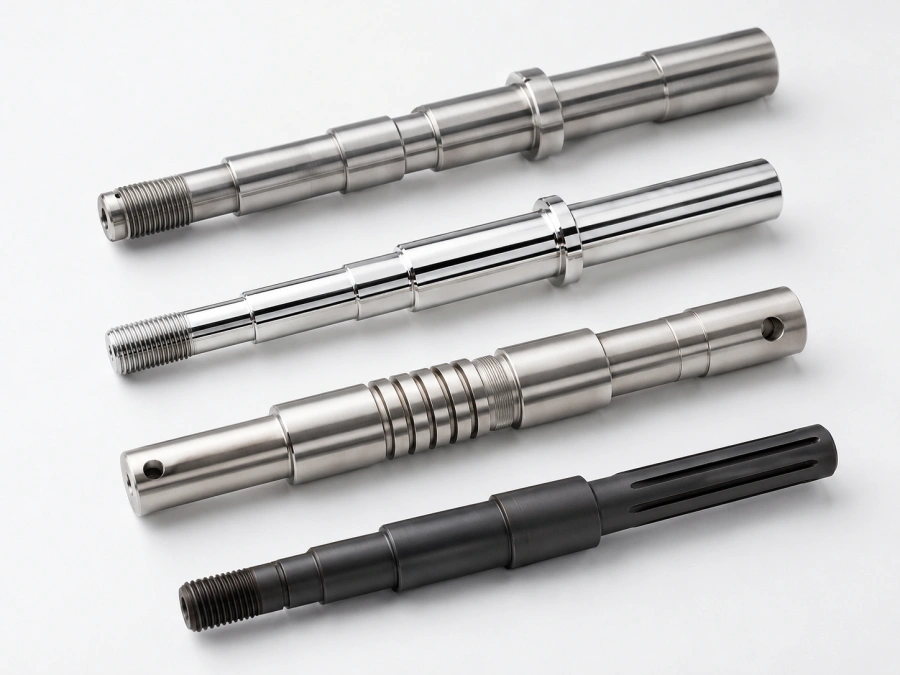
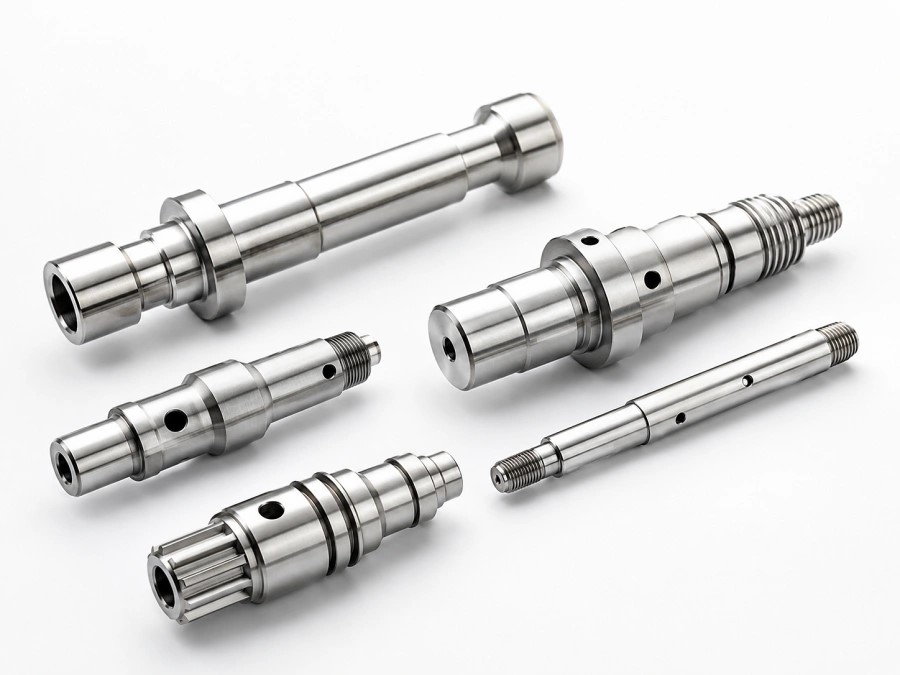
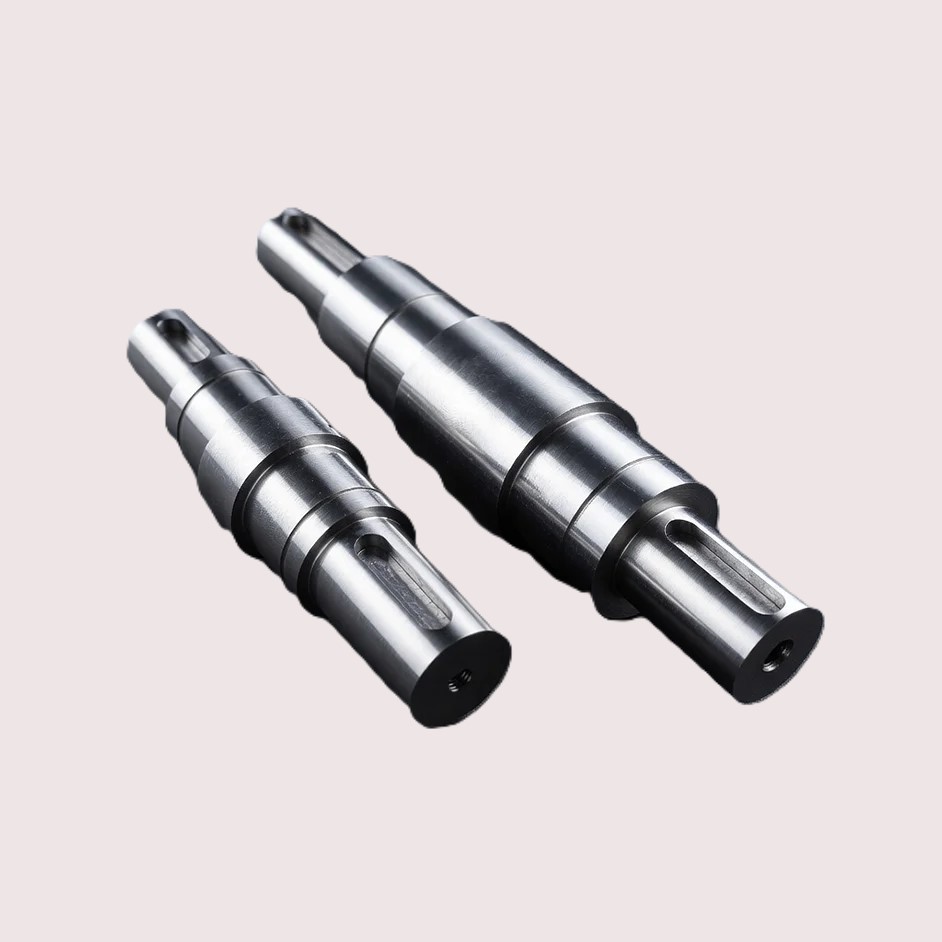
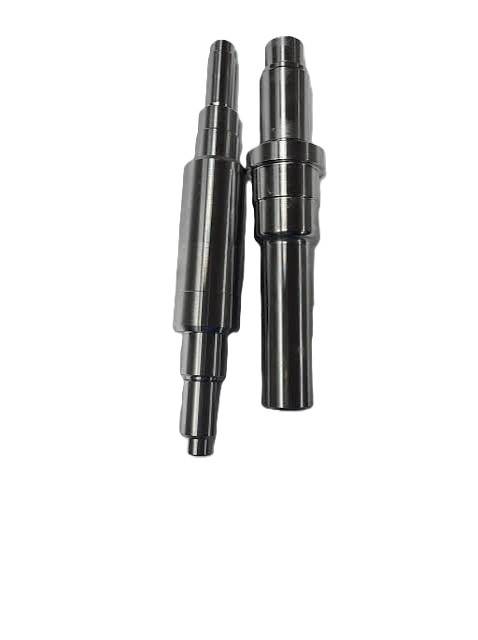
Precision-machined shafts used in engine components, transmission systems, and drivetrain assemblies.
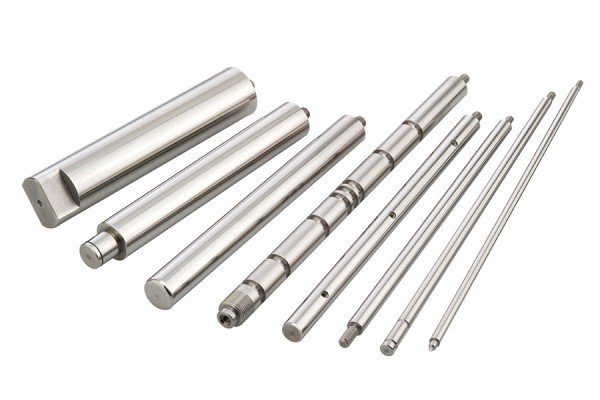
Straight Shafts: Uniform diameter throughout their length. Simple to produce via basic CNC turning, used primarily for low-load applications, guides, or straight power transmission.
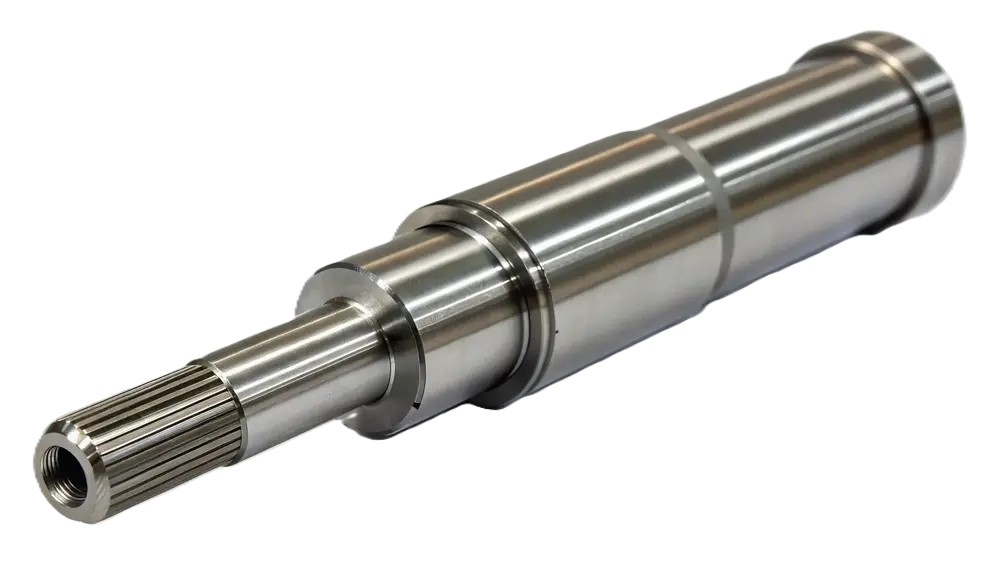
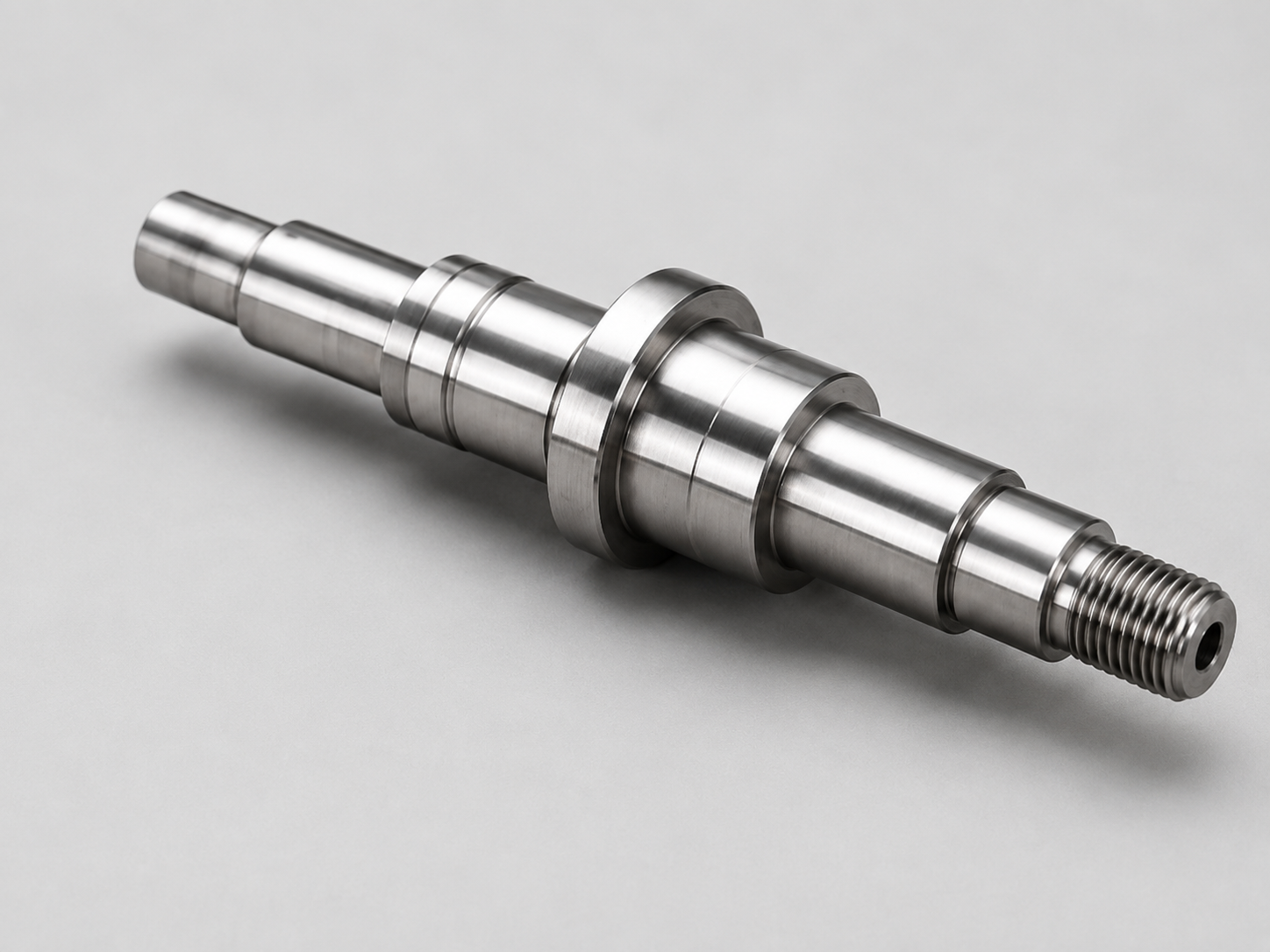
Stepped Shafts: Feature multiple diameter changes along their length. The "steps" serve as shoulders to position and retain mechanical components like bearings, gears, and pulleys.
Tapered Shafts: Feature a gradual change in diameter along the axis. Commonly used for high-concentricity fits (e.g., machine tool spindles) where components need quick mounting and unmounting.
Splined Shafts: Feature longitudinal ridges or teeth cut into the outer diameter. They transfer heavy rotational torque while allowing axial movement of sliding gears or couplings.
Keyed Shafts: Machined with axial keyways (grooves) to accept key stock, securing gears, pulleys, or sprockets against relative rotation.
Threaded Shafts: Machined with external metric or imperial threads at one or both ends to allow secure fastening with nuts or mating components.
A) Material Options : Stainless Steel, Alloy Steel, Carbon Steel
B) Diameter Range : 10mm to 100mm and Length : Up to 500mm
C) Tolerances Standard : 0.01mm to 0.05mm turned and Precision ground as per requirement
D) Heat Treatment : Case hardening and induction hardening